
Small outdoor spaces demand wind chimes that balance musical quality with spatial awareness. The ideal balcony or patio wind chime measures 24-30 inches, produces clear midrange tones without overwhelming neighbors, and mounts securely in limited overhead space. [2026 Data] Urban outdoor living research indicates that 68% of apartment dwellers prioritize compact decor that delivers full sensory impact without visual clutter. Choosing the right size transforms a modest balcony into a personalized retreat where sound and space work in harmony.
Quick Answer: The Three Best Wind Chime Sizes for Compact Spaces
If you are wondering what are the best wind chimes for a small balcony or patio, the answer lies in proportion. For most compact outdoor areas, a wind chime in the 24-30 inch range hits the sweet spot between presence and restraint. These shorter wind chimes produce medium-tone chimes that resonate clearly without dominating the acoustic environment of a tightly packed apartment complex.
A common mistake is buying a large, bass-heavy chime meant for a sprawling garden and trying to squeeze it onto a four-foot balcony. The result is often overwhelming sound and awkward visual bulk. Compact wind chimes, specifically designed for these intimate settings, offer a more refined experience. choosing the right wind chime size ensures you get the musicality you want without sacrificing your limited square footage.
| Feature | 24-30 Inch Chimes | 36+ Inch Chimes |
|---|---|---|
| Overall Length | Compact, fits low ceilings | Requires significant vertical clearance |
| Tone Range | Midrange, bright to alto | Bass to tenor, deeper resonance |
| Space Requirements | Minimal footprint, ideal for corners | Needs open space to swing freely |
| Neighbor Consideration | Lower volume, less intrusive | Carries further, potential for noise complaints |
| Best Placement | Balcony rails, small patios, porches | Large gardens, backyards, open lawns |

Why Tube Length Determines Your Balcony Wind Chime Selection
Tube length is the single biggest factor influencing pitch. Longer tubes generate lower frequencies, creating deep, resonant tones. Shorter tubes produce higher pitches that are brighter and more delicate. For apartment balcony chimes, you generally want tubes that produce a midrange frequency low enough to sound musical, but high enough to be gentle on the ears at close range.
Think about overhead clearance too. If your balcony has a low awning or overhang, a 38-inch chime might drag on the railings or hit the ceiling during high winds. Renters especially need to consider how a chime hangs when the wind picks up. You don't want a expensive, beautiful chime getting damaged because it’s too long for the space. how wind chime tones affect your space is worth understanding before you buy.
When looking at tube count, you will typically see 6-tube or 8-tube configurations for small space outdoor decor. Six tubes are standard for compact models like the Havasu series. This configuration allows for a clear pentatonic melody without excessive complexity. Eight-tube chimes, like the Kindness series, offer a richer, fuller chord but may produce a higher volume that could be too much for a shared wall environment.
- 15-20 inches: High-pitched, tinkling sound; best suited for garden accents rather than primary musical pieces.
- 21-27 inches: Bright, clear alto tones; ideal for high-traffic areas where a subtle presence is preferred.
- 28-34 inches: Balanced midrange; the "goldilocks" zone for small patios and balconies seeking musical depth.
- 35-40 inches: Deep alto to tenor; suitable for large porches or open-plan outdoor living rooms.
- 41+ inches: Resonant bass tones; designed for gardens and open yards where sound can travel freely.
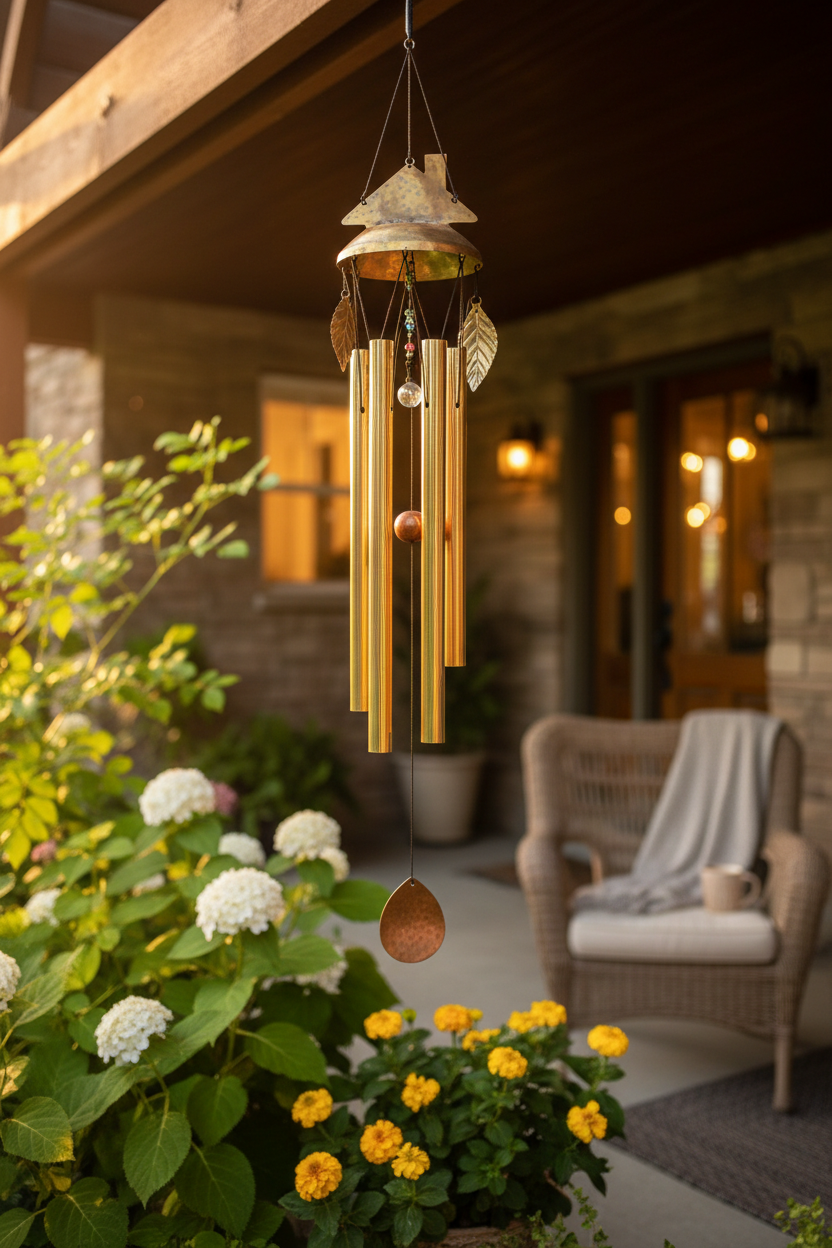
Hand-Tuned Pentatonic Scales: Sound Quality in Limited Square Footage
Not all wind chimes are created equal. Mass-produced chimes often have randomly cut tubes that create dissonant clattering noises. In contrast, hand-tuned wind chimes are precisely cut to specific musical scales. The most popular is the pentatonic scale, a five-note scale that harmonizes beautifully regardless of which notes are struck together. This inherent harmony means your wind chime will never sound "wrong" or clashing, a critical feature when you live close to neighbors.
The Havasu 28-inch Wind Chime is a prime example of space-saving outdoor accents done right. It is hand-tuned to an E Major pentatonic scale. This tuning produces an uplifting, bright melody that feels welcoming without being intrusive. Because it is compact, it moves air easily without requiring the heavy gusts needed to push larger bass tubes. This means it sings more often in the lighter breezes typical of balcony microclimates.
Another excellent option is the Wailua 29-inch Copper-Red Wind Chime. Tuned to a G Major pentatonic scale, it offers a slightly different tonal character warm, resonant, and grounding. The visual appeal of the copper-red finish adds a splash of color to urban settings where greenery might be sparse. For those seeking meaningful gifts for apartment dwellers, the Wailua’s teardrop sail and musical tuning make it a thoughtful choice. explore hand-tuned wind chime options to hear the difference tuning makes.

Material Choices That Balance Durability and Neighbor-Friendly Volume
Material selection impacts both the longevity of your chime and the quality of sound it produces. Aluminum is the industry standard for high-quality wind chimes for good reason. It resists corrosion and offers excellent resonance. Specifically, 6063 aluminum is an alloy known for its ability to hold precise tuning. It produces a clear, bell-like tone that sustains beautifully perfect for patio wind chimes where you want the sound to linger gently in the air.
Volume control is largely dictated by the wind sail the flat piece at the bottom that catches the breeze. A smaller, lighter sail will cause the chime to activate in lighter winds but with softer force. A heavier, larger sail creates louder, more vigorous strikes. For balconies, you want a design that balances responsiveness with moderation. The ash wood components found in select models like the Havasu 38-inch add a classic look and act as a dampener for the clapper, ensuring the strike is musical rather than harsh. wind chime materials and accessories play a huge role in this balance.
| Tube Diameter | Wall Thickness | Sound Projection |
|---|---|---|
| 1 inch | Thin (0.5mm) | Bright, short sustain; suitable for very close quarters. |
| 1.25 inches | Medium (0.7mm) | Clear, moderate sustain; standard for compact wind chimes. |
| 1.5 inches | Thick (1.0mm) | Deep, long sustain; best for open areas where sound needs to travel. |

How to Mount Wind Chimes on Balcony Railings and Overhangs [Study]
Installation is often the biggest hurdle for renters. You generally cannot drill holes into balcony rails or ceiling overhangs without risking a security deposit. Fortunately, there are rental-friendly mounting solutions that are just as secure. Railing clamps (often called C-clamps) can attach a hook to the edge of a balcony rail without tools. Ceiling hooks can be installed on the underside of a balcony overhang if allowed, but adhesive hooks or tension rods are often safer bets for temporary setups.
Before you hang anything, assess the wind exposure. Balcony corners often experience "wind tunnel" effects where breezes accelerate as they squeeze between buildings. A chime placed here may need a heavier sail to prevent chaotic swinging, or conversely, a lighter sail if the airflow is too fierce. selecting the right hooks and mounts will help you find hardware that fits your specific architecture.
- Wind Access: Ensure the spot receives consistent airflow but isn't blasted by direct wind tunnels.
- Clearance Height: Allow at least 6-8 inches of swing space below the wind sail.
- Visual Sightlines: Position the chime where it frames a view rather than blocking it.
- Removal Access: Use easy-release hooks if you need to bring items inside during severe weather.
- Weather Exposure: Partially covered areas enhance durability compared to fully exposed perches.
- Acoustic Reflection: Hanging near a wall can amplify sound; ensure it isn't directed at a neighbor's window.
Comparing UpBlend's Compact Wind Chime Models for Small Outdoor Spaces
When selecting the specific model for your space, UpBlend Outdoors offers distinct choices tailored to different preferences. The Havasu 28-inch Wind Chime stands out as the premier recommendation for balconies. Its compact six-tube design fits comfortably in tight corners where a longer chime would look crowded. The E Major tuning is bright and cheerful, ideal for morning coffee or evening relaxation. Because it is built for outdoor use, it handles the elements well without requiring constant maintenance.
The Wailua 29-inch Copper-Red Wind Chime is a close competitor with a different personality. The G Major tuning is slightly warmer, and the copper-red finish adds a punch of color that contrasts beautifully against concrete or wood. Both models feature the hand-tuned precision you expect from a brand founded by a music teacher. shop UpBlend Outdoors wind chimes to see the full range of colors and sizes available.
| Model | Havasu 28-inch | Wailua 29-inch |
|---|---|---|
| Dimensions | 28 inches overall length | 29 inches overall length |
| Tube Count | 6 tubes | 6 tubes |
| Tuning | E Major Pentatonic | G Major Pentatonic |
| Visual Profile | Classic, understated finish | Copper-red, decorative appeal |
| Ideal Placement | Balcony rails, apartment porches | Small patios, garden nooks |
| Primary Tone | Bright, airy, midrange | Warm, grounded, melodic |
Wind Flow Patterns That Activate Balcony Wind Chimes Consistently
Hanging your chime is one thing; making sure it plays is another. Urban wind patterns are notoriously fickle. Buildings create updrafts and eddies that can either stall a breeze or suddenly accelerate it. On an elevated balcony, you often get rising warm air (thermal updrafts) that can trigger light activity even when the weather seems still. Placing your chime near the corner of a railing often captures these cross-breezes better than the center of the balcony.
Seasonal changes matter too. Summer breezes tend to be lighter and more variable, favoring lighter wind sails. Winter winds can be harsh and cutting, requiring you to move delicate chimes to a sheltered spot or take them down entirely. Understanding these patterns helps maximize wind chime sound and placement. maximizing wind chime sound and placement involves observing your specific microclimate over a few days before settling on a permanent spot.
Key Takeaways: Selecting Wind Chimes That Fit Your Balcony Lifestyle
Bringing music to a small outdoor space is about thoughtful curation. You want a piece that adds personality without clutter, and sound that soothes without disturbing. By focusing on the 24-30 inch range, you ensure your wind chime fits the scale of your environment. Hand-tuned pentatonic scales guarantee that the sounds you introduce are harmonious, turning random breezes into pleasant melodies.
Renters need flexibility, and modern mounting options provide just that. With the right clamp or hook, you can install your chime securely and remove it just as easily when you move. Whether you choose the bright Havasu 28-inch or the warm Wailua 29-inch, the goal is the same: transforming a small balcony or patio into a genuine living space. mastering wind chime placement strategies is the final step in enjoying your new outdoor accent.
- Optimal Size: Stick to 24-30 inches for proportional fit in limited vertical space.
- Musical Quality: Hand-tuned pentatonic scales ensure harmonious, neighbor-friendly sound.
- Material: 6063 aluminum offers superior resonance and durability for outdoor use.
- Mounting: Use non-invasive tools like railing clamps to protect your security deposit.
- Placement: Position in corners to capture cross-breezes and away from neighbor windows.
Frequently Asked Questions About Balcony Wind Chimes
What is what are the best wind chimes for a small balcony or patio?
what are the best wind chimes for a small balcony or patio is an important topic worth understanding in depth. Getting familiar with the fundamentals helps you achieve better results and avoid common pitfalls.
How does what are the best wind chimes for a small balcony or patio work?
what are the best wind chimes for a small balcony or patio works by following a structured approach. Start with the core basics, then build your knowledge progressively consistency is key to seeing real results.
Is what are the best wind chimes for a small balcony or patio right for me?
For most users, yes. The key is matching the approach to your specific goals and constraints. Evaluating a few options before committing saves time and money in the long run.
- How long should a wind chime be for an apartment balcony?
- 24-30 inches is optimal. This length provides enough mass for a resonant tone while remaining compact enough to hang safely in limited overhead space. A 28-inch chime fits comfortably on standard balcony rails without dragging or hitting the ceiling.
- Are wind chimes too loud for shared balcony spaces?
- It depends on the tuning. Hand-tuned pentatonic scales produce musical notes that are generally more pleasant and less intrusive than random clanking. A 28-30 inch aluminum chime produces roughly 45-60 decibels at 10 feet, comparable to normal conversation volume.
- Do wind chimes bother neighbors in close quarters?
- Potentially, yes. However, medium-tone chimes tuned to pentatonic scales are designed to be harmonious rather than jarring. Proper placement such as avoiding the shared wall side minimizes sound transfer while still allowing you to enjoy the melody.
- What is the difference between 6-tube and 8-tube wind chimes?
- Harmonic complexity. A 6-tube chime produces a simpler, clearer melody. An 8-tube chime offers a richer, fuller chord. For small spaces, 6 tubes are often preferred as they create sufficient sound without the density that 8 tubes can generate.
- Can I hang a wind chime without drilling holes?
- Yes. Railing clamps, S-hooks, and adhesive ceiling hooks allow you to securely hang wind chimes without permanent modifications. These solutions are particularly effective on metal or wood balcony rails where drilling is not an option.
- What wind chime materials last longest outdoors?
- Aluminum and synthetic cords. 6063 aluminum tubes resist corrosion and maintain tuning. Durable black cords used in quality chimes withstand UV exposure far better than standard twine. complete wind chime accessory guide offers more on maintenance.
- Is a wind chime a good gift for someone in an apartment?
- Absolutely. Compact wind chimes, like the Havasu 28-inch, are ideal gifts because they enhance small outdoor spaces without requiring a garden. They are meaningful, lasting presents that create a sense of home and tranquility.


