
Deep wind chimes produce lower-pitched, resonant tones through longer aluminum tubes typically 10 to 18 inches or more that vibrate at slower frequencies than compact models. The depth of sound depends on three factors: tube length, wall thickness, and musical tuning (often pentatonic scales in lower registers like E Major or G Major). This guide explains the acoustic principles behind deep tones, compares tube dimensions across product families, and shows how to select wind chimes that match your outdoor space and preferred sound character.
Quick Answer: What Defines a Deep Wind Chime [2026 Data]
Deep wind chimes create their signature low tone wind chimes sound through a specific combination of physical dimensions and musical design. When we talk about "deep" tones, we're referring to lower frequency vibrations typically between 200 and 600 Hz that produce rich, resonant sounds lasting several seconds. The primary driver of this sound character is tube length: longer tubes vibrate at lower frequencies, creating those satisfying alto and baritone wind chimes tones many listeners prefer.
Unlike compact chimes that produce bright, high-pitched notes, deep resonant chimes use tubes measuring 10 inches or longer. The relationship is straightforward physics as tube length increases, the fundamental frequency decreases. A 28-inch tall wind chime with tubes averaging 8 inches produces a brighter sound, while a 41-inch model with tubes reaching 18 inches generates those sought-after bass note wind chimes frequencies.

- Tube Length: Tubes measuring 10 to 18+ inches produce frequencies in the 200-600 Hz range for true deep tones.
- Tuning Register: Pentatonic scales in E Major or G Major create harmonious alto-range sounds.
- Wall Thickness: Thicker aluminum walls (1-1.5mm) extend sustain and deepen resonance.
- Total Height: Overall chime heights of 28 to 41 inches indicate deeper tonal ranges.
For those exploring specific sound profiles, listen to deep wind chime samples to hear the difference between compact and larger wind chimes outdoor models firsthand.
Tube Length Analysis: How Dimensions Control Pitch and Resonance [Study]
The physics behind long tube wind chimes follows an inverse relationship: as tube length increases, the frequency of vibration decreases. This principle, rooted in acoustic fundamentals, determines whether a chime produces a bright soprano tone or a deep alto voice. When an aluminum tube is struck, it vibrates at a fundamental frequency determined by its length, diameter, and wall thickness.
Consider three popular configurations. The Havasu 28-inch wind chime uses six tubes ranging from approximately 6 to 10 inches, tuned to E Major pentatonic in a higher register. The Havasu 38-inch model, by comparison, employs longer tubes (roughly 10 to 14 inches) in the same E Major scale but voiced in the alto range. The Kindness 41-inch wind chime extends this further with eight tubes creating an even fuller harmonic spectrum. Each step up in total height generally corresponds to deeper fundamental frequencies.
Wind chime designers use precise mathematical ratios to cut tubes to exact lengths. A tube cut to half its original length vibrates at approximately double the frequency raising the pitch by one octave. This means tuning requires calculations accurate to fractions of an inch. Hand-tuned wind chimes undergo careful measurement and adjustment to ensure each tube resonates at its intended pitch within the chosen scale.

| Model | Total Height | Tube Count | Average Tube Length | Pitch Range |
|---|---|---|---|---|
| Havasu 28-inch | 28 inches | 6 tubes | 6-10 inches | Mid-range E Major |
| Havasu 38-inch | 38 inches | 6 tubes | 10-14 inches | Alto E Major |
| Kindness 41-inch | 41 inches | 8 tubes | 12-18 inches | Deep, full harmonic |
For more detailed guidance on dimensions, choosing wind chimes based on tube dimensions offers practical comparisons across product families.
Why Pentatonic Scales Deliver Harmonious Deep Tones [Analysis]
Pentatonic tuning forms the foundation of most high-quality wind chimes, and for good reason. A pentatonic scale contains five notes per octave, selected to sound harmonious in any combination. This means that regardless of which tubes resonate together, the result is always pleasing no clashing dissonances or jarring intervals. For low frequency wind chimes, this property becomes especially valuable.
Deep tones have longer sustain, meaning notes ring out for extended periods. If two dissonant notes sounded simultaneously in a deep chime, the clash would persist for seconds rather than resolving quickly. Pentatonic tuning eliminates this problem entirely. The E Major pentatonic scale uses notes E, F#, G#, B, and C# intervals that complement each other across any register, from soprano to alto.
The G Major pentatonic scale, used in the Wailua 29-inch model, follows the same principle with notes G, A, B, D, and E. In the alto register, these scales produce warm, grounding sounds that many listeners find particularly soothing. The lower frequencies carry differently through outdoor air, projecting across larger distances while maintaining clarity. This is why deep wind chimes often work well in open gardens and spacious yards.

- Harmonic Safety: Any note combination sounds musical no discordant intervals possible.
- Extended Sustain: Lower frequencies ring longer without risking clashing overtones.
- Universal Appeal: Pentatonic scales appear in musical traditions worldwide, feeling naturally familiar.
- Alto Clarity: Five-note structure keeps deep tones clear rather than muddy.
- Outdoor Projection: Lower pentatonic registers carry well across open spaces.
For deeper insight into why these sounds resonate so effectively, what makes wind chimes sound soothing explores the acoustic and psychological factors at play.
6063 Aluminum Tube Construction and Sound Projection [2026 Study]
The material used in deep wind chimes significantly influences their tonal character. UpBlend Outdoors uses 6063 aluminum alloy across its product lines, selected for its specific acoustic and physical properties. This alloy, often called "architectural aluminum," offers an optimal balance of density, rigidity, and workability for musical applications.
Aluminum has a lower density than steel or bronze, meaning tubes of equivalent size weigh less while still producing excellent resonance. The 6063 alloy specifically provides consistent grain structure when extruded into tubes, ensuring even vibration patterns across the entire length. This consistency matters for hand-tuned chimes any variation in material density could throw off careful pitch calibration.
Wall thickness also plays a crucial role in sound quality. Thinner walls produce brighter tones with shorter sustain, while thicker walls (typically 1.0 to 1.5mm in quality chimes) deepen the fundamental frequency and extend ringing time. For deep resonant chimes, this thickness contributes to the rich sustain many listeners associate with premium instruments.
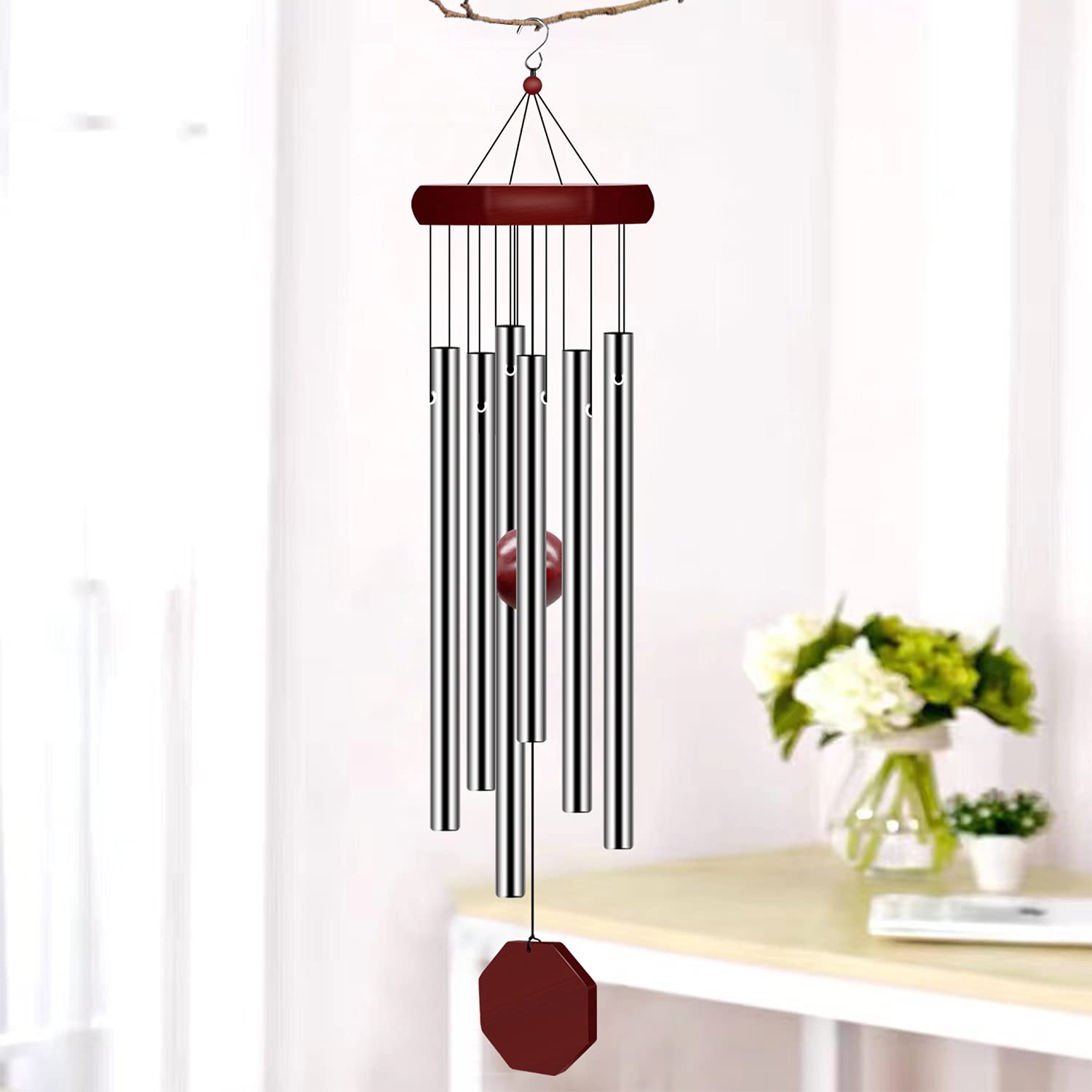
Beyond acoustics, 6063 aluminum offers practical benefits for outdoor use. The alloy resists corrosion in typical outdoor conditions, maintaining its appearance and structural integrity through seasons of exposure. Aluminum does not rust like iron-based metals, though it may develop a subtle surface patina over extended periods. This durability makes it suitable for porch, patio, and garden installations where wind chime accessories and replacement tubes might be exposed to varying weather conditions. For maintenance and component options, wind chime accessories and replacement tubes provides more information.
How to Match Deep Wind Chimes to Outdoor Space Dimensions
Selecting the right wind chime size for your space involves balancing sound projection against spatial proportions. A 41-inch deep chime might overwhelm a small balcony, while a 28-inch model could feel lost in an expansive garden. Understanding how different sizes perform across various settings helps ensure your chime complements rather than dominates its environment.
Compact models like the Havasu 28-inch excel in spaces under 100 square feet. Balconies, small patios, and porch corners provide ideal placement for these mid-range voiced chimes. Their E Major pentatonic tuning stays clear and present without overwhelming nearby conversation. The moderate tube lengths produce focused sound that travels well in confined areas without bouncing excessively off walls or railings.
For spaces between 100 and 300 square feet, the Havasu 38-inch offers a nice middle ground. The alto voice projects further than its 28-inch counterpart, filling medium-sized porches, deck areas, and courtyard gardens. The adjustable clapper on this model allows fine-tuning of responsiveness helpful in areas with varying wind exposure. Larger spaces above 300 square feet benefit from the Kindness 41-inch or similar large wind chimes outdoor models. The eight-tube configuration creates a fuller sound field that carries across open lawns and substantial gardens.
- Balconies (Under 50 sq ft): Choose 28-inch models; compact tubes suit confined acoustics.
- Small Patios (50-100 sq ft): 28 to 32-inch chimes balance presence without overwhelming.
- Covered Porches (100-200 sq ft): 38-inch alto chimes fill medium spaces with rich resonance.
- Open Decks (200-300 sq ft): 38 to 41-inch models project across larger footprints.
- Garden Areas (300+ sq ft): 41-inch chimes carry across open outdoor environments.
- Memorial Settings: Consider sound travel to nearby seating areas when selecting size.
For detailed placement strategies, mastering wind chime placement strategies offers location-specific guidance for maximizing sound quality.
Havasu 38-Inch vs Kindness 41-Inch: Sound Character Comparison [2026]
Choosing between the Havasu 38-inch and Kindness 41-inch models often comes down to sound character preferences and intended setting. Both produce deep tones, but their different configurations create distinct listening experiences. Understanding these differences helps match the right chime to your outdoor environment and personal taste.
The Havasu 38-inch features six tubes tuned to E Major pentatonic in the alto register. This configuration produces a focused, cohesive sound. The six tubes cover the five notes of the pentatonic scale plus an octave duplicate, creating a tight harmonic relationship. When struck by wind, the E Major voicing delivers warm, grounding tones with clear pitch definition. The adjustable clapper allows control over how readily the chime activates useful in exposed locations with stronger or more variable winds.
The Kindness 41-inch, with its eight-tube configuration, offers a broader sonic palette. More tubes mean additional harmonic overtones and a fuller sound texture. Rather than simply extending the E Major sequence, the eight tubes create denser chord structures when multiple tubes resonate together. This fuller harmonic range suits larger spaces where sound has room to develop and dissipate naturally without overwhelming listeners.
| Feature | Havasu 38-Inch | Kindness 41-Inch |
|---|---|---|
| Tube Count | 6 aluminum tubes | 8 aluminum tubes |
| Total Length | 38 inches | 41 inches |
| Tuning | E Major pentatonic, alto | Full harmonic range |
| Tone Character | Warm, focused, clear | Rich, full, resonant |
| Ideal Use | Porches, gardens, medium spaces | Large yards, open areas |
For gifting considerations, especially in residential neighborhoods, Kindness wind chimes for balanced neighborhoods discusses how sound character factors into meaningful presents that neighbors will appreciate.
Hand-Tuning Process and Acoustic Precision in Deep Chimes [Study]
The difference between mass-produced wind chimes and hand-tuned instruments lies in the precision of pitch calibration. Hand-tuning involves individually adjusting each tube to ensure it resonates at its intended frequency within the chosen scale. This process requires trained ears, specialized tools, and patience but the results justify the effort for discerning listeners.
UpBlend Outdoors applies this meticulous approach across its product lines, a practice rooted in the company's founding by a music teacher in 2015. Designing around sound means prioritizing musical accuracy over mere visual appeal. Each tube undergoes careful measurement, cutting, and fine-tuning. Minor adjustments often involving slightly shortening or thinning the tube wall at specific points bring the pitch into exact alignment with the target note.
This attention to detail matters particularly for deep wind chimes. Lower frequencies have longer wavelengths, meaning small pitch inaccuracies become more noticeable. A tube off by even a few cents (hundredths of a semitone) can introduce subtle dissonance that attentive ears detect. Hand-tuning eliminates these inconsistencies, ensuring each note in the pentatonic scale relates properly to the others.
Hand-tuned wind chimes undergo individual pitch calibration for each tube, with some manufacturers reporting tuning accuracy within 3-5 cents of target frequency precision comparable to musical instruments rather than decorative items.
The tuning process also accounts for how tubes interact. When multiple tubes resonate together, harmonic overtones combine to create the chime's characteristic voice. Proper tuning ensures these combinations enhance rather than conflict with each other. The result is a cohesive musical experience rather than random noise. For more on available hand-tuned options, UpBlend Outdoors wind chime collection showcases products designed around these sound-first principles.
Key Takeaways: Selecting Deep Wind Chimes for Sound and Space
Understanding how tube length, tuning, and construction shape sound helps you select wind chimes that match both your outdoor environment and personal preferences. The right choice brings years of musical enjoyment, whether for your own space or as a meaningful gift.
- Tube Length Matters: Longer tubes (10-18+ inches) produce deeper frequencies in the 200-600 Hz range.
- Tuning Defines Character: Pentatonic scales in E Major or G Major ensure harmonious note combinations.
- Material Influences Tone: 6063 aluminum offers consistent resonance and outdoor durability.
- Size Should Match Space: 28-inch for small areas, 38-inch for medium, 41-inch for large outdoor spaces.
- Hand-Tuning Ensures Quality: Individual pitch calibration creates true musical instruments, not just decorations.
For maximizing your chime's sound potential, where to hang wind chimes for maximum sound provides placement tips for various outdoor settings.
FAQ: Deep Wind Chimes and Low-Frequency Sound
Do longer tubes always produce deeper tones?
Yes, tube length determines fundamental frequency. Longer tubes vibrate at lower frequencies, creating deeper pitches. A 14-inch tube produces a lower note than a 6-inch tube of the same diameter and wall thickness. This relationship is consistent across all wind chime designs.
What tuning produces the deepest sound?
Lower pentatonic registers (E Major alto) create deep tones. The scale itself matters less than the register E Major and G Major pentatonic can both be voiced in alto ranges. The Havasu 38-inch demonstrates this with E Major tuning in a lower register for its characteristic warm sound.
How much space does a 41-inch wind chime need?
300+ square feet suits large wind chimes outdoor use. The Kindness 41-inch fills substantial spaces with its eight-tube harmonic range. Smaller areas may result in sound reflecting off surfaces, creating a cluttered acoustic environment. Open gardens and large decks work best.
Can deep wind chimes handle outdoor exposure?
Quality aluminum chimes are built for outdoor use. UpBlend's 6063 aluminum tubes resist corrosion in typical outdoor conditions. While not described as weatherproof, these materials withstand seasonal exposure when properly maintained. Ash wood components may require occasional care in harsher climates.
Why choose hand-tuned chimes over mass-produced options?
Hand-tuning ensures precise pitch relationships between tubes. Mass-produced chimes often approximate pitches, resulting in less cohesive sounds. Hand-tuned instruments like those from UpBlend undergo individual calibration, creating true musical harmony rather than random tones.
What makes a good memorial wind chime?
Deep tones and durable construction suit memorial purposes. Lower frequencies carry emotional weight, while quality materials ensure lasting remembrance. Many choose E Major or G Major pentatonic tunings for their calming, harmonious qualities. The Havasu 38-inch with adjustable response allows customization for specific memorial garden settings. For additional options, wind chime accessories guide covers maintenance and personalization possibilities.


