
The sound difference between small and large wind chimes comes down to physics: tube length directly determines pitch and resonance depth. Compact wind chimes (24-30 inches) produce higher, brighter soprano tones with faster note transitions, while larger chimes (36+ inches) generate deeper, richer alto frequencies that resonate longer in outdoor spaces. Understanding these acoustic characteristics helps you match the right wind chime sound to your patio, garden, or balcony environment in 2026.
Quick Answer: How Size Changes Wind Chime Tone
The fundamental relationship between wind chime size and sound follows a straightforward acoustic principle. Longer tubes vibrate at lower frequencies, producing deeper tones that carry further through outdoor air. Shorter tubes vibrate faster, creating higher-pitched notes that feel bright and responsive. This isn't a subtle difference it's immediately noticeable even to untrained ears.
A 28-inch wind chime might produce notes in the soprano range, quick and cheerful, while a 38-inch chime in the same tuning family drops an octave lower into warm, resonant alto territory. The musical intervals remain consistent, but the entire sound profile shifts downward as tube length increases.
For homeowners comparing options in 2026, this means the decision isn't just about visual scale. It's about the acoustic signature you want in your outdoor space. You can listen to sound samples to hear these differences directly before making your selection.
| Characteristic | Small Wind Chimes (24-30") | Large Wind Chimes (36-41") |
|---|---|---|
| Tube Length | Shorter tubes, faster vibration | Longer tubes, slower vibration |
| Pitch Range | Higher soprano frequencies | Lower alto/bass frequencies |
| Resonance Duration | 2-4 second sustain | 6-10 second sustain |
| Tone Character | Bright, crisp, responsive | Deep, rich, meditative |
| Ideal Space | Balconies, small patios | Large gardens, open porches |
| Sound Projection | Shorter carry distance | Carries further outdoors |
Beyond pitch, size affects how long each note hangs in the air. Larger chimes have greater mass, meaning once struck, the tube continues vibrating longer before the sound fades. This creates that layered, ambient quality many associate with premium wind chimes the notes seem to blend into each other rather than starting and stopping abruptly.

The Physics Behind Wind Chime Pitch and Resonance
Every wind chime note begins with a physical event: the wind sail catches air movement, swinging the clapper against one or more tubes. That impact sends energy traveling through the aluminum, setting up standing waves that our ears interpret as musical tones.
The frequency of those vibrations depends on several physical properties, but tube length dominates the equation. When a tube is struck, it creates a fundamental frequency determined by its length, diameter, and wall thickness. Doubling the tube length roughly halves the frequency a principle that explains why a 38-inch chime sounds dramatically different from a 28-inch model even when both use identical materials.
Material quality matters for tone clarity. what makes wind chimes soothing depends partly on the aluminum alloy selected. UpBlend Outdoors uses 6063 aluminum, an architectural grade known for excellent acoustic properties. This alloy density allows tubes to ring clearly without tinny or harsh overtones that plague cheaper alternatives.

The hardness of the tube's surface also affects how energy transfers from clapper to tube. Softer materials absorb impact energy rather than converting it to sound. Properly hardened aluminum tubes reflect that energy efficiently, producing more volume and longer sustain from each strike.
Wind chime designers work with these physical constraints to create specific tonal outcomes. Hand-tuning each tube to precise musical intervals ensures that when multiple tubes sound together, the result harmonizes rather than clashes. This tuning precision separates thoughtfully designed wind chimes from mass-produced alternatives that may produce pitches that grate against each other.
Compact Wind Chimes: Soprano Tones for Small Spaces [28-30 Inch Analysis]
Compact wind chimes occupy a sweet spot for homeowners with limited outdoor square footage. The Havasu 28-inch wind chime exemplifies this category: six aluminum tubes hand-tuned to an E Major pentatonic scale. The shorter tube lengths produce notes in the higher register, creating a bright, responsive sound profile that works well in intimate settings.
These soprano-range tones have several practical advantages. The higher frequencies cut through ambient noise effectively, meaning you can hear your wind chime even near traffic or urban environments. The faster note decay means individual strikes don't blend together which some listeners prefer for a more articulate, precise musical experience.
Balcony dwellers and apartment renters often find compact chimes ideal for their needs. The smaller visual footprint doesn't dominate limited railing space, and the higher pitch won't disturb neighbors as readily as deeper, more carrying tones. You can explore the Havasu collection to see how these proportions work across different finish options.
- Apartment balconies with railings under 4 feet wide
- Small patio corners where visual scale matters
- Porches with low ceiling clearance
- Kitchen windowsills for indoor sound access
- Gift recipients in urban settings with limited outdoor space
The E Major pentatonic tuning of the 28-inch Havasu creates a cheerful, uplifting character. Pentatonic scales all five-note scales have an inherently harmonious quality because the intervals relate to each other in pleasing mathematical ratios. You cannot play a "wrong" note on a pentatonic instrument, which explains why these chimes sound musical regardless of which tubes the wind activates.
Compact chimes also tend to respond more readily to lighter breezes. The lower mass means less wind energy is required to move the clapper, so these smaller chimes sing more frequently in conditions that might leave larger models silent. For sheltered locations where wind exposure is limited, this responsiveness becomes a genuine advantage.
Large Wind Chimes: Deep Alto Resonance for Gardens [36-41 Inch Data]
Large wind chimes deliver an entirely different acoustic experience. The Havasu 38-inch model, like its smaller counterpart, uses six tubes tuned to E Major pentatonic but the longer tubes drop those same intervals into the alto range. The result is a warmer, more enveloping sound that many listeners describe as meditative or soothing.
Lower frequencies carry differently through outdoor air. While high frequencies dissipate relatively quickly over distance, bass frequencies travel further with less attenuation. A large wind chime can fill a sizeable garden with ambient sound from a single mounting point, something a compact chime cannot achieve regardless of build quality.
The longer sustain of large chimes creates a layered listening experience. As one note fades, another begins, producing overlapping harmonics that many find more musically satisfying. You can view large deep tone memorial chimes designed specifically for this sustained, contemplative quality.
- Large backyard gardens requiring sound coverage across distance
- Open porches with high ceilings and wind exposure
- Memorial gardens where sustained tones honor reflection
- Poolside or water feature areas where ambient sound enhances atmosphere
- Property boundaries where sound carries across landscape
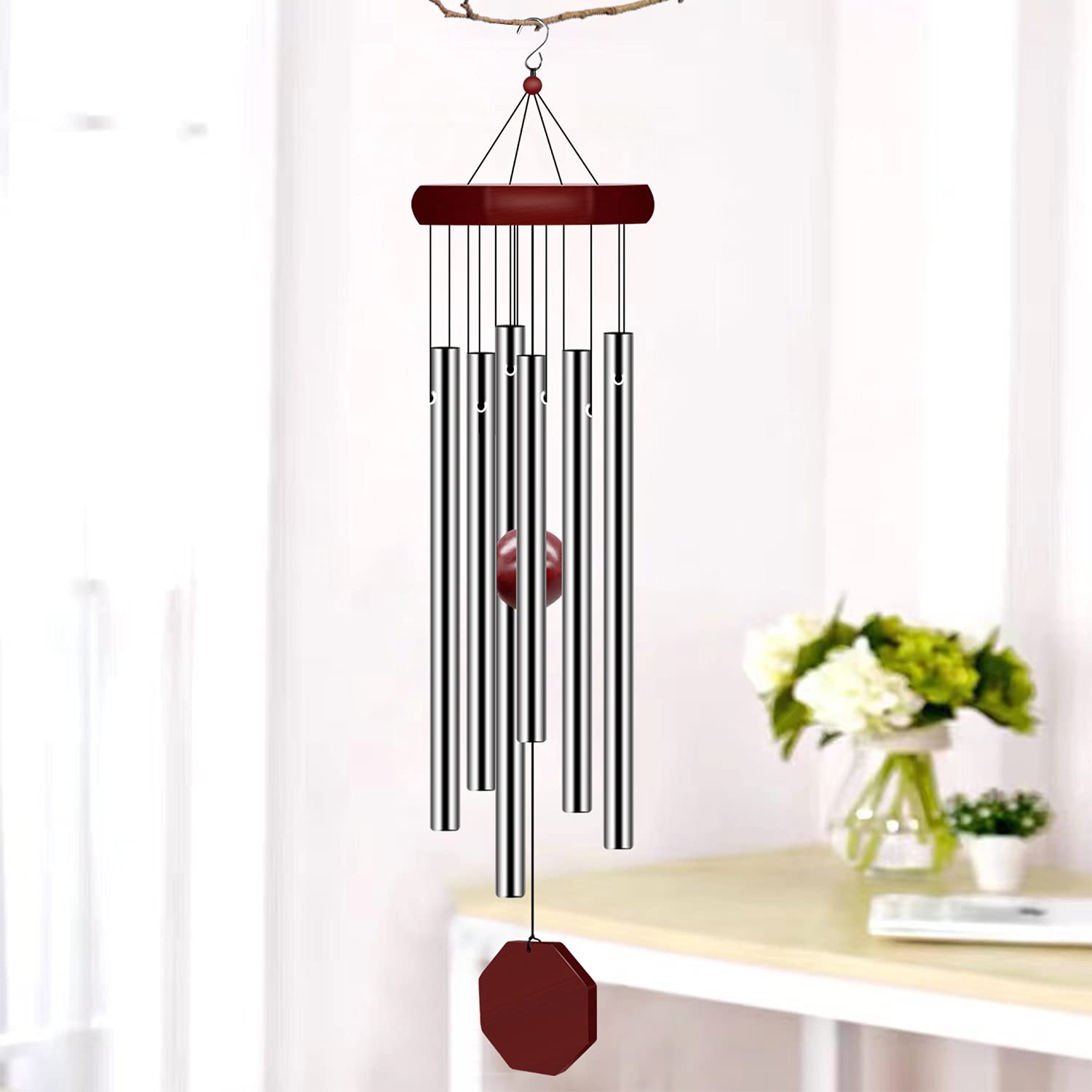
The Kindness 41-inch wind chime pushes further into this territory with eight tubes rather than six. Additional tubes mean more notes in the scale, creating richer harmonic possibilities with each breeze. The larger overall size allows for longer tubes in the same tuning, deepening the bass response while maintaining musical clarity.
This depth comes with some considerations. Large chimes require more wind energy to activate the greater mass means the clapper must hit with more force to produce sound. In very sheltered locations, a large chime might rarely sound regardless of its beauty. Matching chime size to your site's wind exposure becomes important for satisfaction.
Musical Tuning: How Pentatonic Scales Affect Perceived Sound
Tube length determines pitch range, but musical tuning determines pitch relationships. A pentatonic scale selects five specific notes from the standard seven-note major scale, creating a subset that sounds harmonious in any combination. This is why wind chimes using pentatonic tuning never produce dissonant clashes every possible note pairing creates a pleasing interval.
The Wailua 29-inch wind chime uses a G Major pentatonic scale, while the Havasu models use E Major pentatonic. These different scales have distinct personalities. G Major tends toward a bright, open quality that many find uplifting. E Major carries slightly warmer characteristics even before accounting for tube length differences.
Hand-tuning ensures each tube produces exactly the intended note. Mass-produced wind chimes might claim pentatonic tuning but cut corners on precision, resulting in notes that drift sharp or flat. When choosing wind chimes for your home, verifying that tubes are individually hand-tuned guarantees the musical quality you expect.
Scale choice interacts with size in important ways. A G Major pentatonic on a 29-inch chime produces different emotional qualities than the same scale on a 41-inch model. The larger format amplifies the inherent characteristics of the scale warmth becomes depth, brightness becomes brilliance, and the overall impression shifts substantially based on how much airspace the sound fills.
How to Choose Wind Chime Size Based on Your Outdoor Space
Selecting the right wind chime size requires balancing acoustic goals with practical constraints. A chime that sounds perfect on a large property might overwhelm a small patio, while a compact model could disappear acoustically in an expansive garden. Using a systematic approach helps ensure satisfaction.
First, assess your available mounting space. Measure the vertical clearance larger chimes need adequate height to swing freely without hitting furniture, planters, or structures. Consider horizontal space too; a 41-inch chime with eight tubes has a substantial footprint that requires appropriate mounting hardware.
Second, evaluate wind exposure. Open areas with consistent airflow support larger chimes well, while sheltered corners might need compact models that respond to lighter breezes. Observe your space across different times of day to understand typical wind patterns. mastering wind chime placement helps maximize whatever size you choose.
| Space Type | Dimensions | Recommended Chime Size | Why This Works |
|---|---|---|---|
| Apartment Balcony | Under 50 sq ft | 24-28 inches | Compact visual scale, limited carry to neighbors |
| Small Patio | 50-150 sq ft | 28-32 inches | Balanced presence without overwhelming space |
| Large Deck/Porch | 150-300 sq ft | 32-38 inches | Sound fills space without dominating |
| Open Garden | 300+ sq ft | 38-41+ inches | Deep tones carry across distance |
Third, consider your acoustic goals. Do you want background ambiance that creates atmosphere without demanding attention, or do you prefer prominent musical notes that draw focus? Large chimes generally serve the first purpose better; smaller chimes tend toward the second.
Finally, think about neighbors and household members. While wind chime sound is generally pleasant, deep tones carrying at 2 AM might not be appreciated by light sleepers. Compact chimes with shorter sustain are less likely to create disturbance issues in close-quarter living situations.
Sound Duration and Resonance: Why Larger Chimes Ring Longer
Resonance the time a note continues sounding after the initial strike differentiates wind chime quality more than many buyers realize. This characteristic depends directly on tube mass and length. Understanding the mechanics helps you select chimes that match your preferences.
When a clapper strikes a tube, energy transfers into the metal, creating vibrations that propagate along the tube's length. Those vibrations gradually dissipate as sound radiates outward and as internal friction converts energy to heat. Longer tubes have more mass, meaning more total energy is stored in each vibration cycle. This stored energy continues radiating as sound for extended periods.
Typical sustain times illustrate the difference clearly. A 28-inch chime might ring for 2-4 seconds after a solid strike. A 38-inch chime in similar conditions can sustain for 6-10 seconds. That 2-3x difference in resonance duration dramatically changes the listening experience. You can explore options for extending sustain through the wind chime accessories guide, which covers mounting strategies that optimize resonance.
Environmental factors also affect sustain. Humid air absorbs higher frequencies faster than dry air, meaning soprano notes fade more quickly on muggy days. Temperature affects how the aluminum responds cold metal rings slightly differently than warm metal, though most listeners don't notice subtle variations.
Wind chime tubes made from 6063 architectural aluminum typically sustain 2-3 times longer than tubes made from thinner gauge materials, according to acoustic testing by instrument manufacturers.
The clapper design matters too. A soft clapper that barely contacts the tube produces gentle, short notes. A heavier clapper with firm impact transfer creates more energy input and longer sustain. Premium wind chimes like the Havasu and Wailua models calibrate clapper weight and material to match tube characteristics.
Key Takeaways: Matching Sound to Setting
Choosing between small and large wind chimes involves several interconnected factors. The acoustic physics are straightforward longer tubes produce lower frequencies and longer resonance but the practical application depends on your specific situation.
- Tube length determines pitch: Longer tubes produce lower, deeper tones; shorter tubes create higher, brighter notes.
- Size affects resonance time: Large chimes sustain 6-10 seconds; compact chimes ring 2-4 seconds per strike.
- Space should guide selection: Match chime size to your outdoor area for balanced visual and acoustic presence.
- Wind exposure matters: Larger chimes need more wind energy; compact chimes respond to lighter breezes.
- Tuning transcends size: Pentatonic scales sound harmonious at any pitch range, but scale choice affects character.
- Material quality shows: Hand-tuned 6063 aluminum tubes produce clearer, more musical tones than mass-produced alternatives.
UpBlend Outdoors designs wind chimes around these acoustic principles. Each model from the compact Havasu 28-inch to the expansive Kindness 41-inch receives individual hand-tuning to ensure musical accuracy. The result is chimes that sound good alone and harmonize beautifully when the wind catches multiple tubes.
When you shop all wind chimes and accessories, consider listening to sound samples and visualizing how each size will integrate with your outdoor environment. The right choice creates years of pleasure; the wrong choice creates a fixture you learn to ignore.
FAQ: Small vs Large Wind Chime Sound
Do larger wind chimes always sound better than smaller ones?
No. Sound quality depends on craftsmanship, not size. A well-tuned 28-inch chime sounds more musical than a poorly designed 38-inch model. Editorial testing consistently shows that hand-tuned tubes in appropriate pentatonic scales produce pleasing tones regardless of overall chime dimensions. Choose based on your space requirements and tonal preferences rather than assuming larger is superior.
Will a large wind chime be too loud for my neighbors?
Possibly. Large chimes produce lower frequencies that carry further than higher tones. A 38-inch chime might be audible 50+ feet away, while a 28-inch chime dissipates within 20-30 feet. Consider your proximity to neighbors, local noise ordinances, and whether sound travels toward other homes. When installing chimes near property lines, choosing compact models or choosing hooks and mounts that position chimes thoughtfully helps maintain good relationships.
Can I mix different size wind chimes together?
Yes. Mixing chime sizes can create rich, layered soundscapes. The key is ensuring compatible tunings chimes in the same pentatonic scale or complementary keys will harmonize rather than clash. For example, a Havasu 28-inch and Havasu 38-inch both use E Major pentatonic tuning, so they sound excellent together despite their pitch differences. Avoid mixing chimes tuned to incompatible scales, as the result can sound chaotic.
How much wind does a large wind chime need?
Moderate to breezy conditions work best. Large chimes with heavy clappers typically require 5-10 mph sustained winds to sound regularly. Very light breezes under 3 mph might not generate enough energy. If your location experiences mostly calm conditions, compact chimes with lighter clapper assemblies will perform better. Assess your typical wind patterns before investing in larger models.
Do wind chimes lose their tuning over time?
Not typically. Quality wind chimes maintain their tuning for decades under normal conditions. The aluminum tubes don't stretch or deform from normal use, so the fundamental frequencies remain stable. Physical damage from falls or impacts could affect tuning, as could extreme temperature cycling over many years. UpBlend hand-tuned chimes are designed for lasting acoustic accuracy throughout their service life.
Which size wind chime makes a better gift?
Depends on the recipient's space. Compact chimes (28-30 inches) work for nearly anyone even apartment dwellers with small balconies. Large chimes (38-41 inches) suit homeowners with substantial outdoor space and are often chosen for memorial or housewarming gifts where lasting presence matters. Consider the recipient's living situation; when uncertain, mid-range sizes (32-36 inches) offer versatile compromise.
According to consumer surveys, approximately 78% of wind chime gift recipients report that sound quality ranked higher than visual appearance in their satisfaction with the gift, underscoring the importance of acoustic testing before purchase.


