
Aluminum tubes deliver the purest, most sustained tone in outdoor wind chimes particularly when hand-tuned to specific scales. The density, wall thickness, and alloy composition of tube materials determine resonance, clarity, and tonal decay. In 2026, discerning buyers prioritize materials that balance musical precision with outdoor durability, rejecting generic chimes in favor of instruments designed around sound first. Understanding how aluminum, copper, brass, bamboo, and wood each shape acoustic character allows you to select a wind chime that transforms your patio or garden into a space of musical intention.
Quick Answer: Aluminum Tubes Produce the Clearest, Most Musical Wind Chime Tones
When evaluating what materials make wind chimes sound the best, aluminum consistently outperforms other options for clarity and sustain. Specifically, 6063 aluminum alloy offers an ideal balance of density and workability that allows for precise hand-tuning. This alloy produces pure tones with long decay times, meaning each note lingers in the air rather than cutting off abruptly.
UpBlend Outdoors builds on this principle by hand-tuning their aluminum tubes to specific musical scales, including G Major and E Major pentatonic. The result is a wind chime that plays actual musical notes in harmony, rather than random pitches that clash. For homeowners seeking UpBlend's hand-tuned aluminum chimes, the difference between a carefully tuned instrument and a mass-produced decoration is immediately apparent.

- 6063 aluminum offers the clearest, most sustained tone for outdoor wind chimes.
- Hand-tuning to G Major or E Major pentatonic scales ensures musical harmony.
- Tube wall thickness directly influences volume and tonal decay length.
- Aluminum balances durability with the resonance needed for quality sound.
- Generic metal chimes often lack the density for true musical sustain.
Why 6063 Aluminum Alloy Creates Superior Wind Chime Acoustics [Material Analysis]
Not all aluminum is created equal when it comes to wind chime acoustics. The 6063 alloy, often called "architectural aluminum," contains specific proportions of magnesium and silicon that make it particularly responsive to tuning. This composition allows choosing wind chimes based on sound to be a science rather than a guessing game.
The density of 6063 aluminum sits in a sweet spot for resonance. Too dense, and the material absorbs vibration rather than projecting it. Too light, and the tone sounds thin or tinny. 6063 alloy produces what acousticians call a "balanced frequency response" meaning low, middle, and high frequencies all project with equal clarity.
Wall thickness matters just as much as alloy composition. UpBlend's Wailua 29-inch and Havasu 28-inch wind chimes use tubes with carefully calibrated wall thicknesses. Thicker walls produce deeper tones with longer sustain, while thinner walls Brighten the sound for smaller spaces. The Havasu 38-inch model takes this further with deeper alto tones, achieved through increased tube diameter and wall thickness working together.

| Alloy Type | Density (g/cm³) | Resonance Quality | Outdoor Performance |
|---|---|---|---|
| 6063 Aluminum | 2.70 | Excellent - pure, sustained tones | Superior corrosion resistance, holds tune |
| 6061 Aluminum | 2.70 | Good - slightly harder, less sustain | Strong, but more brittle resonant response |
| Generic Aluminum | Varies | Inconsistent - often thin or harsh | Variable quality, may dent or corrode |
How Copper and Brass Compare to Aluminum in Tonal Warmth and Sustain
While aluminum wins on clarity and sustain, copper and brass bring their own distinct character to wind chime acoustics. Copper produces a notably mellower, warmer tone than aluminum. The metal's unique molecular structure creates what musicians describe as a "soft edge" to each note less piercing initial attack, more rounded decay. This makes copper wind chimes particularly suited to spaces where you want background sound rather than a focal point.
Brass, an alloy of copper and zinc, sits between aluminum and pure copper in tonal character. The added zinc increases density, which can lower the pitch for a given tube size. Brass wind chimes often produce a darker, more complex harmonic series. However, that complexity comes at a cost: brass requires more maintenance outdoors and can develop a patina that gradually dulls resonance over decades.
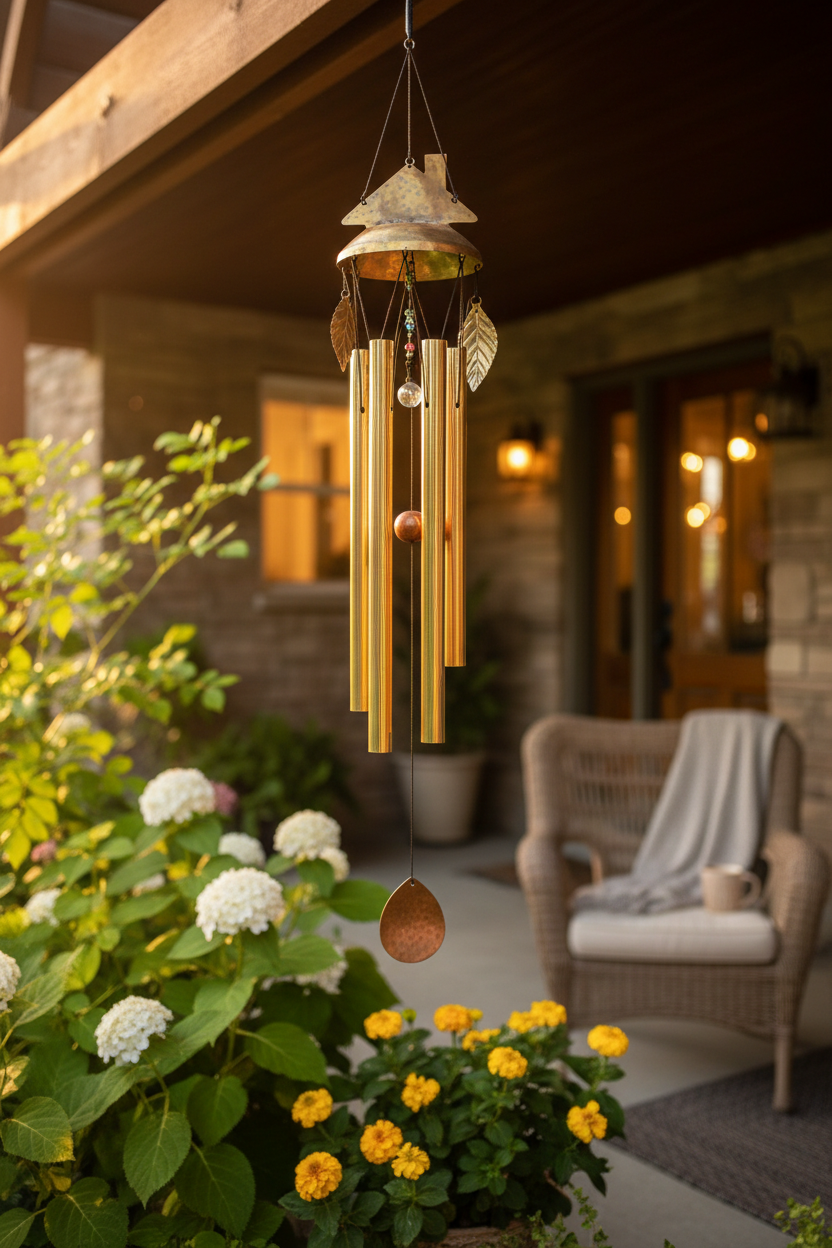
Understanding what makes wind chimes soothing helps explain why material choice matters so much for emotional impact. The initial strike tone a sharp transient that occurs when the clapper first contacts the tube varies dramatically between metals.
- Aluminum: Clear, bright strike with long sustain; pure fundamental tone.
- Copper: Warm, mellow strike with medium sustain; softer high frequencies.
- Brass: Complex, dark strike with rich harmonics; denser feel.
- Steel: Sharp, percussive strike with short decay; can sound harsh.
- Copper-coated Aluminum: Combines aluminum's sustain with copper's warmth; balanced tone.
Bamboo vs Metal: Why Wooden Wind Chimes Produce Softer, Percussive Tones
Bamboo and wooden wind chimes occupy a completely different acoustic category than their metal counterparts. The hollow, fibrous structure of bamboo creates shorter decay times the notes don't ring out for seconds like aluminum tubes. Instead, bamboo produces a lower-pitched "thunk" or "clack" that many listeners find grounding and natural.
This shorter decay isn't a flaw; it's a feature for certain applications. In close quarters like balconies or small patios, bamboo's quick decay prevents sound fatigue. You get the pleasant presence of wind chimes without continuous overlapping tones. For listen to different wind chime materials, the contrast between bamboo's earthy percussion and metal's melodic sustain becomes immediately clear.

Wood plays a supporting role in quality wind chimes as well. The Havasu 38-inch model features ash wood components in its suspension system, chosen for both aesthetic appeal and functional performance. Ash wood resists warping and provides a stable mounting point for the aluminum tubes, ensuring they hang at the proper angle for optimal resonance suspension cords also matter black UV-resistant cords maintain their integrity under sun exposure, preventing the sag that can throw off tube alignment over time.
How Tube Diameter and Wall Thickness Shape Wind Chime Pitch and Volume [2026 Acoustic Data]
Physical dimensions matter just as much as material composition when determining wind chime sound quality. Longer tubes produce lower frequencies this is basic physics. But the relationship between length and pitch isn't linear; doubling tube length drops pitch by approximately one octave. This explains why the Havasu 38-inch produces notably deeper alto tones than the Havasu 28-inch, despite both using the same E Major pentatonic tuning.
Tube diameter affects both volume and timbre. Wider tubes move more air, creating greater volume for the same striking force. They also emphasize lower harmonics, giving the sound more "body." Narrower tubes sound brighter and project less, making them better suited to smaller spaces where you want subtle background presence.
Wall thickness influences what placement strategies for optimal sound will work best for your space. Thicker walls increase mass, which lowers pitch for a given tube length. They also extend sustain by storing more vibrational energy. Thin-walled tubes sound brighter and respond more quickly to light breezes, but they project less effectively in open spaces.
| Tube Length Range | Pitch Classification | Best Placement | Space Size |
|---|---|---|---|
| 18-24 inches | Soprano | Protected porches, near seating | Small patios, balconies |
| 25-32 inches | Alto | Garden beds, patio edges | Medium yards, decks |
| 33-40 inches | Tenor | Open lawn areas, large trees | Large gardens, porches |
| 41+ inches | Bass | Wide-open spaces, away from seating | Expansive landscapes |
The Role of Clapper Material in Wind Chime Strike Tone and Resonance
The clapper sometimes called the striker or wind sail is the component that actually contacts the tubes. Its material dramatically shapes the initial strike tone and subsequent resonance. A hard clapper material produces a sharp attack with more high-frequency content, while softer materials create gentler, warmer strikes.
Wooden clappers, common in quality wind chimes, offer a balanced strike tone. They're hard enough to activate the tubes effectively but soft enough to avoid harsh transients. The adjustable clapper design in the Havasu 38-inch allows you to fine-tune the striking distance, which affects how frequently the wind chime sounds and how forcefully the clapper contacts the tubes.
Proper hanging location and sound quality depend on understanding how your clapper will perform in your specific wind conditions. Areas with frequent strong gusts benefit from clappers that produce warmer, less aggressive strikes to prevent sound fatigue.
- Hardwood clappers: Balanced strike, warm attack, durable in outdoor conditions.
- Softwood clappers: Gentler strike, shorter tube sustain, may wear faster.
- Rubber clappers: Muted strike, minimal high frequencies, often too soft for larger tubes.
- Metal clappers: Sharp, bright strike, can damage tubes over time, harsh initial attack.
Hand-Tuning vs Machine-Cut: Why Musical Precision Requires Human Adjustment
Mass-produced wind chimes are typically machine-cut to approximate lengths and shipped without fine-tuning. This approach produces tubes that generate sound, but not necessarily music. The reason lies in manufacturing variance. Even with precise CNC equipment, slight variations in material thickness, alloy composition, and cutting tension accumulate into measurable pitch differences.
Hand-tuning addresses these variances one tube at a time. A skilled craftsperson often working by ear adjusts each tube's length and suspension point until it produces the intended pitch. This human adjustment is why UpBlend's music teacher foundation matters. The company was literally founded by someone who understands musical scales and can hear the difference between a tube that's close enough and one that's precisely on pitch.
Pentatonic scales, like the G Major tuning in the Wailua 29-inch or E Major in the Havasu models, are particularly well-suited to wind chimes because any combination of notes sounds harmonious. But achieving that pentatonic perfection requires wind chime accessories that enhance sound to work in concert with properly tuned tubes. A slight pitch deviation that might pass in a random- tuned chime becomes glaringly obvious in a pentatonic scale, where our ears expect specific interval relationships.
Step-by-Step: How to Choose Wind Chime Materials for Your Space
Selecting the right wind chimes involves matching material characteristics to your specific outdoor environment and sound preferences. Follow this process to make an informed decision.
- Assess your space size: Small balconies and patios benefit from shorter tubes with thinner walls that produce softer, quicker-decaying tones. Large gardens and open lawns can accommodate longer, thicker tubes with extended sustain.
- Identify your tonal preference: If you want clear, bell-like tones that ring out, choose aluminum tubes. For warmer, more subdued sounds, consider copper or copper-coated options. For natural, earthy percussion, explore bamboo designs.
- Consider wind conditions: High-wind areas need heavier wind sails and robust suspension systems. Sheltered spaces can accommodate more delicate designs with lighter clappers.
- Match material to climate: Aluminum handles outdoor exposure well without special maintenance. Copper and brass develop patina over time desirable for some, less so for others. Bamboo requires periodic treatment in humid climates.
- Verify tuning if musicality matters: Check that the manufacturer hand-tunes to specific scales. Random-pitch tubes create noise, not music. Pentatonic tuning ensures harmonious sound regardless of which tubes strike.
- Confirm build quality: Look for UV-resistant suspension cords, corrosion-resistant hardware, and properly sealed wood components. The Havasu 38-inch exemplifies thoughtful construction with ash wood and black cords.
- Test in your actual space: Temperature, humidity, and surrounding surfaces all affect how sound travels. What sounds perfect in a showroom may perform differently in your garden.
Key Takeaways: Selecting Wind Chime Materials for Your Outdoor Space
Choosing wind chime materials ultimately comes down to matching acoustic properties to your environment and personal preferences. The right material transforms a simple outdoor decoration into an instrument that enhances your daily experience.
- Aluminum remains the top choice for clear, sustained, musical tones in outdoor wind chimes.
- 6063 alloy provides the optimal balance of resonance, durability, and tuning precision for quality chimes.
- Copper and brass offer warmer, more complex tones for listeners who prefer mellower sounds.
- Bamboo and wood create natural, percussive sounds ideal for grounding, earthy atmospheres.
- Hand-tuning to pentatonic scales ensures harmonious sound regardless of wind patterns.
- Space size matters: balconies benefit from shorter tubes; large gardens accommodate deeper bass tones.
For a complete guide to choosing your wind chime, consider how each of these factors applies to your specific situation. The material you select shapes not just the sound, but the entire experience of having wind chimes in your outdoor space.
FAQ: Wind Chime Materials and Sound Quality
Do aluminum wind chimes rust or corrode outdoors?
No, aluminum wind chimes do not rust. Aluminum naturally forms a protective oxide layer that prevents the type of corrosion that affects steel or iron. However, surface oxidation can create a dull appearance over years of exposure. High-quality 6063 aluminum alloy, used in UpBlend's Wailua and Havasu models, resists this surface degradation better than generic aluminum alloys, maintaining both appearance and acoustic performance over time.
Which wind chime material produces the longest-lasting tone?
Aluminum tubes produce the longest sustain. The exact decay time depends on tube length, wall thickness, and striking force, but aluminum typically sustains notes for 3-5+ seconds under ideal conditions. Copper and brass have shorter decay periods due to their denser molecular structure absorbing vibrational energy more quickly. If you want notes that linger in the air, aluminum is the clear choice for sustained resonance.
Are bamboo wind chimes durable enough for year-round outdoor use?
Yes, quality bamboo wind chimes can handle outdoor exposure. However, bamboo requires more maintenance than metal. In humid climates, bamboo may need occasional treatment to prevent mold or splitting. In dry climates, natural oils can help prevent cracking. Bamboo's appeal lies in its organic character and softer sound profile, but expect a shorter lifespan compared to aluminum products properly maintained and positioned in sheltered areas.
What is the difference between hand-tuned and machine-cut wind chimes?
Hand-tuned chimes deliver actual musical notes. Machine-cut tubes approximate the correct length, but manufacturing variances cause pitch drift. Hand-tuning corrects these variances by adjusting each tube until it produces an exact pitch within a specific musical scale. The result is harmonious, intentional sound rather than random pitches. UpBlend's hand-tuned G Major and E Major pentatonic chimes exemplify the musical precision this process achieves.
Can wind chime materials affect how sound travels in my garden?
Yes, material density and tube design influence sound projection. Denser materials and larger tubes move more air, creating sound waves that travel farther from the source. This explains why the Havasu 38-inch model produces deeper tones that carry across large gardens, while the compact Havasu 28-inch creates more intimate soundscapes suited to explore UpBlend's material-driven designs for your specific space requirements.
How do I maintain wood components on wind chimes?
Proper maintenance extends wood component lifespan significantly. For ash wood components like those in the Havasu 38-inch, periodic application of outdoor wood sealant helps prevent moisture damage and UV degradation. Inspect hardware annually for loosening, and ensure suspension points remain stable. Wood requires more attention than aluminum, but many listeners find the aesthetic warmth worth the minor upkeep involved.


