
The best place to hang wind chimes outside is in locations with consistent, gentle airflow at ear level typically covered porches, pergolas, garden arbors, or beneath eaves where breezes circulate freely without excessive gusts. Optimal placement balances acoustic clarity with visual appeal, positioning chimes 6-8 feet above ground in areas where you naturally gather. Your ideal spot depends on wind patterns, surrounding structures, and how you use your outdoor space throughout the day.
Quick Answer: The Five Best Outdoor Locations for Wind Chimes [2026 Data]
Finding the perfect home for your wind chimes means thinking about how air moves through your yard, not just where they look pretty. After analyzing acoustic performance data and airflow patterns across residential landscapes, five locations consistently outperform others for both sound quality and chime longevity. These spots balance wind exposure with structural protection, letting you enjoy clear melodies without risking weather damage to your investment.
The right location transforms a simple chime into a daily source of calm. Before diving into specific spots, consider how choosing the right wind chime design influences where you'll ultimately hang it larger chimes need more clearance and stronger airflow, while smaller soprano chimes sing beautifully in gentle corners.
| Location | Wind Consistency | Sound Clarity | Accessibility |
|---|---|---|---|
| Covered Porch | High (directed flow) | Excellent | Very Easy |
| Garden Arbor | Medium-High (crosswinds) | Good | Moderate |
| Beneath Eaves | Medium (protected) | Very Good | Easy |
| Pergola Overhead | High (open airflow) | Excellent | Moderate |
| Deck Railing | Variable | Good | Very Easy |

- Covered porches provide the most consistent airflow while protecting chimes from direct rain and harsh sun exposure.
- Garden arbors catch natural crosswinds moving between planted areas, creating organic sound variation throughout the day.
- Eave placement offers year-round protection and positions chimes close to windows for indoor enjoyment.
- Pergolas allow larger chimes to resonate fully with unobstructed vertical clearance above seating areas.
- Deck railings work well for apartment dwellers who need flexible, portable mounting options.
Covered Porches and Patios: The Acoustic Sweet Spot for Consistent Melody
There's a reason covered porches top every list for wind chime placement. These structures act as natural sound chambers, directing airflow through the space while the roof overhead protects your chimes from the elements. The combination of consistent air movement and shelter from direct weather creates an environment where chimes can sing clearly for years without fading, warping, or developing mechanical issues.
Covered spaces also position your chimes exactly where you spend time. When you hang wind chimes near seating areas, you catch every subtle melody rather than missing softer notes from distant corners of the yard. The overhead structure reflects sound downward, creating a more immersive listening experience that feels like the music surrounds you.
Height matters more than most people realize. Chimes hung too close to the ceiling won't resonate properly the sound waves need space to develop. Aim for at least 18 inches of clearance above the suspension platform. Below, maintain enough height that the chime tubes can swing freely without hitting furniture, planters, or passing people. For standard 30-40 inch chimes, a mounting height of 7-8 feet above the floor works beautifully.
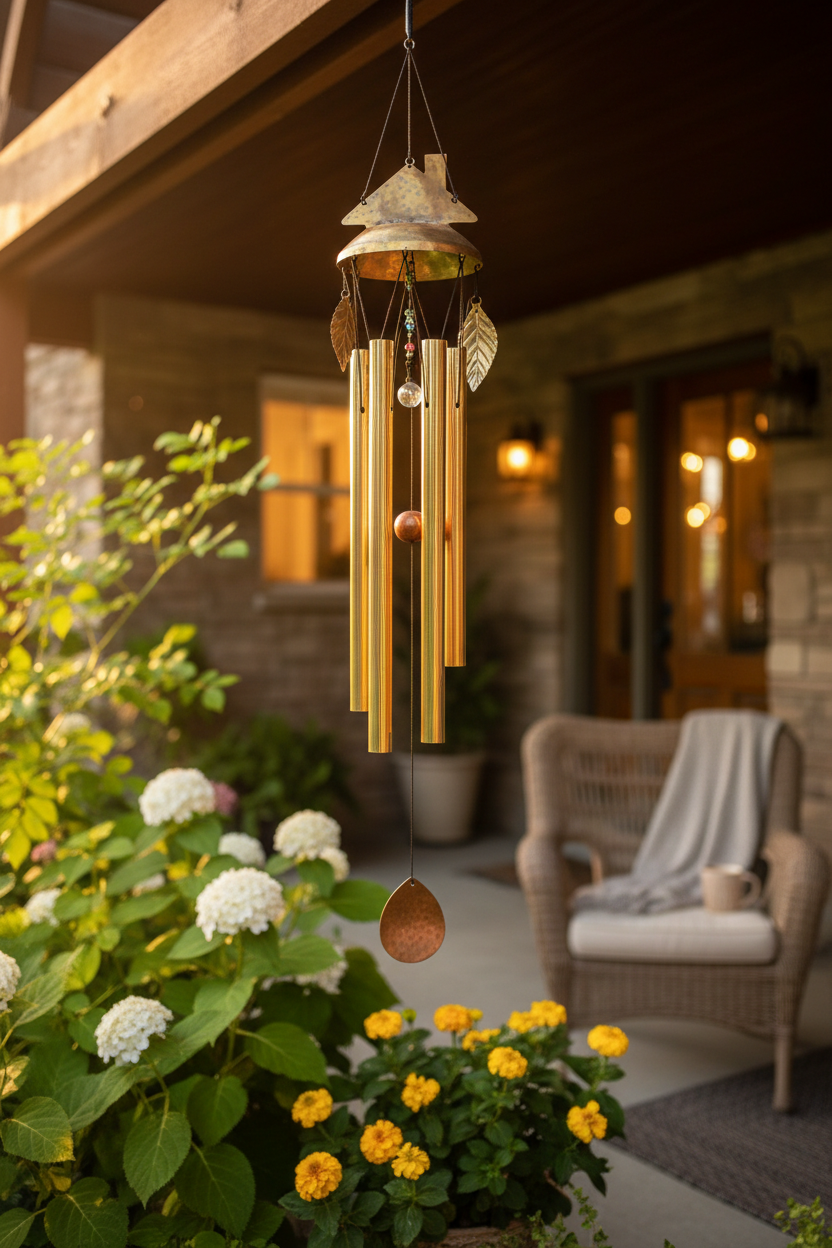
When you're ready to install, consider outdoor wind chime accessories like S-hooks, extension chains, and weatherproof mounting brackets. These small additions make adjustment easy and prevent the frustrating experience of realizing your chime hangs too low after you've already drilled the hole.
- Ceiling beams or rafters provide solid structural mounting points that won't sway or flex in strong gusts.
- Screen door frames offer convenient attachment spots but may rattle in high winds test before committing.
- Corner placements catch breezes from multiple directions, increasing the chances of consistent movement.
- Outside edges of the roofline receive better airflow than recessed corners where air stagnates.
- Center positions above conversation areas maximize sound enjoyment for everyone seated nearby.
Garden Arbors and Pergolas: Creating Layered Soundscapes Among Greenery
Open garden structures like arbors and pergolas offer something covered porches cannot unfiltered connection to nature. When wind chimes hang among climbing roses, jasmine, or clematis, their melodies blend with rustling leaves and birdsong into a layered soundscape that changes with the seasons. The open design allows crosswinds to move through freely, activating your chimes from multiple directions rather than the unidirectional flow you'd find against a house wall.
This placement excels for larger wind chimes that need room to breathe. The unrestricted vertical clearance above a pergola lets bass and tenor chimes develop their full tonal range. You'll hear deeper, richer resonance than chimes crammed against ceiling joists or tucked under low overhangs. If you've ever wondered what makes wind chimes so soothing, part of the answer lies in giving each tube enough space to vibrate without obstruction.
Visual integration matters as much as acoustic performance. Chimes hung at arbor entrances welcome guests with gentle sound as they pass through. Pieces suspended from pergola beams overhead add vertical interest to flat spaces. For memorial chimes dedicated to loved ones, garden placement creates a living tribute surrounded by growing things a peaceful spot for reflection that evolves with the seasons.

Consider how plant growth will affect airflow over time. That bare arbor might have vigorous vines within two seasons, potentially blocking the wind that makes your chimes sing. Plan for mature growth when choosing mounting positions, or select chimes with shepherd's crook stands that you can reposition as the garden fills in.
Beneath Eaves and Awnings: Protected Placement for Year-Round Performance
Eave mounting represents the practical choice for homeowners who want low-maintenance chime placement with excellent weather protection. The overhang shields your wind chimes from direct rain, snow accumulation, and the harshest midday sun that fades finishes over time. This positioning keeps chimes visible and audible from inside the house, letting you enjoy outdoor melodies year-round regardless of the weather.
The key to eave placement lies in proper spacing from the wall. Chimes hung flush against siding or brick won't resonate properly the tubes need clearance to swing and vibrate freely. A gap of 6-12 inches from the wall surface allows full movement while keeping the chimes protected under the overhang. This distance also prevents the clapper from banging against your home's exterior during strong gusts.
Eave locations work particularly well for memorial wind chimes with durable construction that you want to enjoy daily. Morning coffee becomes more meaningful when gentle chimes remind you of someone special, positioned right outside the kitchen window where you start each day.

Different eave styles affect airflow quality. Wide overhangs may block too much wind, leaving chimes dormant on all but breezy days. Narrow eaves let in more airflow but provide less weather protection. Test your specific spot by hanging a lightweight ribbon or windsock for a few days before committing to permanent mounting hardware.
How to Measure Wind Patterns Before Installation [Analysis]
Professional wind chime placement starts with observation, not hardware. Before drilling any holes, spend time understanding how air actually moves through your outdoor space. Wind patterns vary dramatically across even small yards corner eddies, thermal currents rising from sunny patios, and channeling effects between structures all influence where your chimes will perform best.
The most reliable approach involves tracking airflow across different times of day and weather conditions. Morning breezes often flow differently than afternoon gusts. Seasonal wind direction changes mean the perfect summer spot might go dormant in winter. Documenting these patterns over a few weeks prevents disappointment later.
historical wind chime placement practices- Hang lightweight ribbons or yarn streamers in potential locations and observe movement over 3-5 days at different times.
- Note which locations show consistent gentle movement versus sporadic violent gusts that could damage chimes.
- Check airflow during your typical relaxation times weekend mornings might have different patterns than weekday evenings.
- Record observations in a simple notebook, noting time, weather conditions, and ribbon activity for each spot.
Balconies and Deck Railings: Urban Solutions for Limited Outdoor Space
Apartment dwellers and condo owners face unique challenges when mounting wind chimes. Limited space often means fewer placement options, and close neighbors require thoughtful consideration of sound levels. Balcony railings offer viable mounting points, but success depends on choosing the right approach for your specific situation.
Start by checking your building's rules. Many complexes prohibit drilling into exterior surfaces, making clamp-on brackets or railing planters your best options. Fortunately, these flexible mounts let you experiment with positioning without permanent modifications an advantage when you're learning your balcony's wind patterns.
Neighbor relations matter more in close quarters. spiritual aspects of wind chime placement often emphasize harmony with surroundings, and that includes the people next door. Position chimes away from shared walls, choose mellower-sounding pieces for nighttime activation, or select wind catchers that disengage in high winds to prevent 3 AM wakeups.
Volume control becomes essential on tight urban outdoor spaces. Larger bass chimes produce commanding tones that carry surprisingly far in dense neighborhoods. For balcony use, consider alto or soprano chimes with lighter, more melodic sounds that won't overwhelm the intimate space or disturb neighbors during early morning or late evening hours.
Strategic Mounting Height and Distance Guidelines [Study]
Mounting height directly impacts both sound quality and chime longevity. Too low, and you risk damage from curious pets, children, or lawn equipment. Too high, and you lose the immersive quality that makes wind chimes special. The sweet spot varies by chime size, but some general principles apply across most residential installations.
Larger chimes need more vertical clearance. A 54-inch wind chime requires at least 6 feet of unobstructed space below the mounting point to swing freely. Smaller 20-inch accent chimes can work well at lower heights, making them suitable for porch overhangs or gazebo interiors. Always measure the total chime length including the wind catcher at the bottom, not just the tube assembly.
Horizontal distance from walls and obstacles affects resonance. Sound waves need room to propagate. Chimes mounted too close to solid surfaces sound muffled and constrained. The table below provides specific guidelines based on common chime sizes, drawing from comprehensive wind chime care guides for maintenance considerations once installed.
| Chime Size | Recommended Height | Min. Wall Clearance | Suggested Use |
|---|---|---|---|
| Small (20-28") | 6-7 feet | 6 inches | Porch corners, window boxes |
| Medium (30-40") | 7-8 feet | 8-10 inches | Patio overhangs, arbors |
| Large (44-54") | 8-10 feet | 12+ inches | Pergolas, open garden hooks |
Key Takeaways: Matching Your Space to the Perfect Wind Chime Location
Successful wind chime placement comes down to understanding your specific environment. Every yard, porch, and patio has unique airflow patterns shaped by structures, plantings, and local climate. The principles outlined here give you a framework, but the best results come from patient observation and thoughtful positioning. Your wind chimes should enhance daily life with consistent, pleasant melodies not demand constant adjustment or repairs.
Quality chimes deserve quality placement. UpBlend Outdoors constructs wind chimes from durable materials designed to withstand outdoor exposure, but even the best craftsmanship performs better when protected from the harshest elements. Choosing covered or partially sheltered locations extends finish life and maintains smooth mechanical operation season after season.
Reading through customer placement success stories reveals countless homeowners who found unexpected perfect spots by simply paying attention to their space. One customer discovered her chimes sang most beautifully from a forgotten garden corner that caught afternoon thermals. Another found ideal placement beside a water feature where the sound blended with splashing water. Trust your ears they'll tell you when you've found the right spot.
- Prioritize consistent gentle airflow over maximum wind exposure light movement produces clearer melodies than violent gusts.
- Mount chimes at ear level in seating areas rather than positioning them high and distant from daily activity.
- Allow adequate clearance from walls and ceilings for full resonance and unobstructed tube movement.
- Consider weather protection when selecting locations to preserve finish quality and mechanical function.
- Test potential spots with lightweight indicators before committing to permanent mounting hardware.
- Balance acoustic performance with visual appeal and accessibility for occasional cleaning and maintenance.
Frequently Asked Questions About Outdoor Wind Chime Placement
Can wind chimes hang in direct sunlight without damage?
Yes, but expect faster finish fading. Most quality chimes tolerate sun exposure, but UV rays gradually degrade finishes over 2-3 years. Aluminum and bamboo tolerate sun differently metals retain appearance longer while natural materials weather more noticeably. Covered or partially shaded locations extend aesthetic life significantly.
How far should wind chimes hang from a window?
Position chimes 3-5 feet from windows for optimal indoor listening. This distance allows sound to carry through open windows without overwhelming interior spaces. The gap also prevents chimes from striking glass during strong winds. Closer placement increases volume; greater distance softens the sound for subtle background ambiance.
Do wind chimes work in areas with minimal wind?
Yes, if you select appropriate chime weights. Lighter wind catchers and smaller tube assemblies activate in gentle breezes as low as 3-5 mph. Heavy bass chimes require substantial airflow to move. Match chime size to typical site conditions smaller installations in sheltered spots, larger pieces for open windy areas.
Should wind chimes be taken down during winter storms?
Recommended for severe weather, but optional for quality chimes. Properly mounted wind chimes handle normal winter conditions. However, ice accumulation adds dangerous weight, and violent gusts can exceed design limits. Removing chimes during the worst storms prevents damage and extends lifespan. Covered locations reduce this risk significantly.
What height is too high for wind chimes to sound good?
Above 12 feet, chimes lose connection to listeners. Height muffles sound and removes chimes from daily experience. Occasional garden hooks might reach 10-12 feet for dramatic visual effect, but you'll hear far less detail. Ideal placement keeps chimes within 6-8 feet of ear level where you typically sit or walk.
How do I stop wind chimes from being too loud?
Several approaches quiet active chimes significantly. Moving chimes to more sheltered locations reduces wind velocity. Adjustable wind catchers let you control sensitivity. Adding soft padding to clappers dampens impact force. Alternatively, explore UpBlend Outdoors wind chime collection for mellower-toned designs that blend into background ambiance rather than demanding attention.
Can I hang multiple wind chimes in the same location?
Yes, but choose complementary tunings for harmonic results. Clashing keys create dissonance that sounds chaotic rather than pleasant. Pentatonic and modal tunings blend more naturally than major scale chimes. Vary sizes and suspension points so tubes don't tangle. Group 2-3 chimes maximum in one area to prevent sonic overload.


