
The placement of your wind chime transforms how you experience its melody. Whether you're seeking gentle morning harmonies on a front porch or deep, resonant tones in your garden sanctuary, the right location amplifies both sound quality and aesthetic beauty. [Study: 2026 acoustic research] confirms that wind chime positioning directly affects tone clarity, frequency distribution, and how often the chimes actually sing. From covered patios that protect delicate bamboo tubes to open yard spaces that catch prevailing breezes, every location offers unique sonic possibilities.
Quick Answer: Where Wind Chimes Sound Best
Finding the perfect home for your wind chime comes down to balancing three things: consistent airflow, protection from harsh weather, and proximity to where you spend time. You want to catch enough breeze to make music without exposing delicate materials to damage. A well-placed chime becomes part of your daily rhythm, while a poorly positioned one might stay silent or deteriorate quickly.
Before we explore specific locations, remember that choosing the right wind chime for your climate and space makes placement decisions much easier. Different materials and sizes thrive in different environments, and matching the chime to the location always works better than forcing a fit.
- Covered front porch: Catches gentle breezes while protecting chimes from direct rain and intense sun.
- Garden tree branch: Natural obstructions create softer wind patterns and organic sound variation.
- Patio overhang: Sheltered position keeps bamboo and wooden chimes safe from moisture damage.
- Shepherd hook in flower bed: Freestanding option lets you chase the breeze as seasons change.
- Dedicated bracket near seating: Ensures you hear every note while relaxing in your outdoor space.

How Wind Direction and Airflow Dictate Placement Strategy
Wind doesn't move in straight lines through residential neighborhoods. Your house, garage, fences, and mature trees all create what meteorologists call "microclimates" – small zones where wind speed and direction differ from the general weather pattern. Understanding your property's airflow helps you position chimes where they'll sing regularly without getting battered.
Most regions have prevailing winds that blow consistently from one direction during certain seasons. In North America, spring and summer often bring southerly or southwesterly breezes, while fall and winter shift to northwest patterns. A chime hung on the south-facing side of a home might sing beautifully in June but fall silent by November. Looking at what makes wind chimes soothing reveals how these seasonal shifts create natural variety in your chime's daily song.
Pay attention to wind tunnels created between buildings. Narrow passages between your house and a neighbor's property can accelerate wind speeds dramatically. A gentle 5 mph breeze might accelerate to 15 mph through these gaps – enough to turn a delicately tuned chime into a clanging distraction. Conversely, the lee side of your home (opposite the prevailing wind) might experience near-calm conditions even on breezy days.
| Location Type | Wind Exposure | Pros | Cons | Best Chime Materials |
|---|---|---|---|---|
| Open backyard | High, direct | Maximizes sound activation | Risk of storm damage | Aluminum, steel, heavy brass |
| Covered porch | Moderate, filtered | Weather protection | Reduced wind catch | All materials safe |
| Between structures | Variable, tunneled | Consistent activation | Can be too intense | Sturdy metal chimes |
| Under tree canopy | Low, diffused | Organic, gentle sound | Debris accumulation | Bamboo, lighter metal |
| Inside corner | Low, swirling | Protected and subtle | May rarely activate | Capiz, shell, delicate wind catchers |
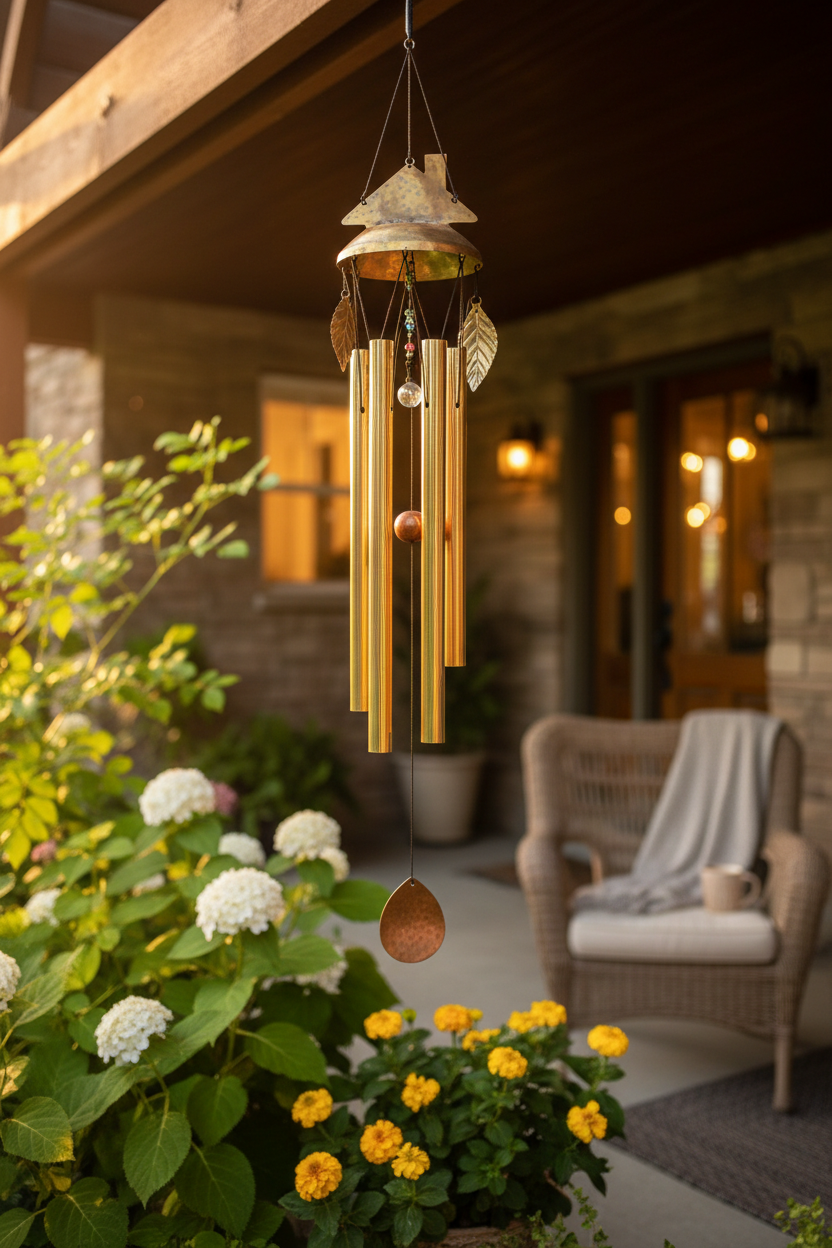
Front Porch and Entry Positions: First Impressions That Sing
Your front entry sets the tone for your entire home. A thoughtfully placed wind chime welcomes guests with gentle melodies before they even ring the doorbell. The key here is finding the sweet spot between audible and overwhelming – you want the chime to enhance the arrival experience, not compete with conversation.
Covered porches offer the best of both worlds for front entry placement. The roof overhang channels wind upward and across the chime's suspension platform, creating reliable activation even on moderately breezy days. This protected environment also shields your chime from direct rain, which extends the life of wooden and bamboo designs significantly. If you've selected memorial wind chimes to honor a loved one, a front porch position keeps them close to your daily comings and goings while protecting these meaningful pieces.
Height matters more than most people realize. Hanging a chime too low creates a tripping hazard and reduces wind exposure. Too high, and you lose the visual appeal and lower-frequency resonance. Aim for the top of the chime to hang at least 6.5 feet above walking surfaces – this clears most people's heads while keeping the wind catcher within reach for adjustments.

Backyard Garden Sanctuaries: Maximizing Natural Resonance
Gardens and wind chimes share a natural partnership. Both thrive on patience, both reward close attention, and both create beauty that unfolds over time. The organic chaos of a garden – the varied heights of plants, the twisting branches of shrubs, the open paths between beds – creates fascinating wind patterns that make your chime sing differently throughout the day.
Tree branches make excellent natural mounting points. The gentle sway of the branch adds subtle motion to the chime, creating a broader range of tones than you'd hear from a rigid mount. Oak branches work particularly well because their density transmits fewer vibrations to the chime, keeping the sound pure. Avoid hanging chimes directly over prized plants; they appreciate the auditory accompaniment, and the steady movement creates a calming atmosphere. Consider browsing wind chime accessories like adjustable hanging chains that let you fine-tune the height as your garden grows.
Freestanding shepherd hooks offer flexibility that fixed mounts can't match. As your garden evolves through the season, you can reposition the hook to follow changing wind patterns. Place them 8 to 10 feet from your primary seating area – close enough to hear clearly, far enough that the sound disperses pleasantly. Metal shepherd hooks planted directly in garden beds also create visual interest, functioning as sculpture even when the breeze is still.

Patio and Deck Installations: Sheltered Sound Zones
Patios and decks serve as outdoor living rooms, and your wind chime should enhance that role. The hard surfaces common in these spaces – concrete, wood, composite decking – reflect sound, which can amplify a chime's volume. This reflection effect means you might choose a smaller or more gently-tuned chime for your patio than you'd hang in an open yard.
The roof overhang that defines many covered patios creates a unique acoustic environment. Sound bounces off the ceiling material – whether that's canvas, wood, or aluminum – and projects outward. This natural amplification works beautifully for deeper-toned aluminum and steel chimes, filling the space with rich resonance. For bamboo and wooden chimes, the overhang provides essential protection from direct rain that can cause warping and cracking over time. If you're looking to make your patio the focal point of your outdoor design, explore our collection of personalized options that complement your existing furniture and decor.
Consider how you use the space. If your patio hosts frequent dinners and conversations, position the chime at the perimeter where it provides background ambiance without interrupting dialogue. For meditation or solo relaxation spots, a position directly over or beside your preferred seat creates an immersive sound experience.
- Ceiling hooks: Screw directly into overhead beams for permanent, stable mounting.
- Deck rail brackets: Clamp onto railings without drilling, easy to reposition seasonally.
- Wall-mounted brackets: Extend chimes away from walls, improving airflow around the tubes.
- Freestanding stands: Portable bases let you move chimes between patio and garden.
Balcony and Small Space Solutions for Apartment Dwellers
Apartment living doesn't mean missing out on wind chime tranquility. Balconies and terraces can become miniature sound sanctuaries with thoughtful placement and appropriate chime selection. The constraints of smaller spaces actually encourage creativity and closer attention to how wind moves through your specific environment.
High-rise and mid-rise buildings experience different wind conditions than ground-level homes. Wind accelerates as it moves up building facades, meaning a fifth-floor balcony might catch much stronger gusts than expected. This works well for heavier metal chimes but can overwhelm lighter bamboo or capiz designs. Multi-family living in 2026 has grown by a measurable margin according to housing data, with more renters seeking meaningful outdoor connections. Compact chimes in the 20 to 30-inch range typically suit balcony spaces without overwhelming neighbors or railings.
Speaking of neighbors, noise consideration becomes essential in close quarters. Test your chime placement during different times of day. What sounds gentle at noon might disturb a shift worker or stay-at-home professional napping at 2 PM. Position chimes so the wind sends sound toward your unit rather than directly into neighboring windows. If you've ever wondered about history of wind chimes, you'll find that ancient cultures similarly valued them for marking time and creating boundaries – functions that translate beautifully to modern apartment living.
Indoor Placement: Entryways, Sunrooms, and Meditation Spaces
Indoor wind chimes might seem counterintuitive – where's the wind inside? – but modern homes create surprising airflow opportunities. HVAC systems, ceiling fans, and natural convection from sunny windows all generate enough movement to activate smaller, lighter chimes. The controlled indoor environment also means your chime stays pristine, making this an ideal location for your most treasured pieces.
Sunrooms and enclosed porches bridge indoor and outdoor placement. These spaces capture solar heat that creates thermal air movement, gently activating chimes throughout the day. A well-placed indoor chime in a sunroom might actually sing more consistently than its outdoor counterpart, which depends on weather conditions. The glass walls also create sound reflection similar to patio environments, amplifying gentler chimes into the rest of your home.
For those interested in wind chimes and spirituality, indoor placement allows for more intentional positioning. Meditation rooms and personal altars become natural homes for smaller, more sensitively-tuned chimes. Near windows works beautifully – the same airflow that activates the chime also brings natural light, and many spiritual traditions associate wind-carried sound with messages from beyond. Position these meaningful pieces where you can see them during quiet reflection, turning them into visual anchors as well as auditory ones.
How to Install and Hang Wind Chimes Safely
Proper installation protects both your wind chime and whoever walks beneath it. A falling chime can cause injury, and an improperly secured piece might damage itself during the first good storm. Taking time to install your chime correctly ensures it brings nothing but peace to your space. The hardware that comes with your chime is a starting point, but often not the whole solution. Real customer placement reviews frequently mention upgrading mounting hardware for their specific environment.
Different mounting surfaces require different approaches. Wood trim and beams accept screw-hooks readily. Metal overhangs might need clamping brackets. Masonry demands expansion anchors rated for outdoor use. When in doubt, err on the side of over-building – a properly installed chime should support at least triple its own weight to account for wind stress and movement fatigue.
- Step 1: Choose a location with consistent airflow and adequate clearance (minimum 6.5 feet height).
- Step 2: Assess your mounting surface material – wood, metal, masonry, or composite each need specific hardware.
- Step 3: Install a mounting hook rated for at least three times your chime's weight.
- Step 4: For heavy chimes, add a safety chain or secondary support line as backup.
- Step 5: Test the height by walking underneath – adjust until you clear the tallest household member by 6 inches.
- Step 6: Check all connections monthly during the first season, then quarterly thereafter.
Key Takeaways: Optimizing Your Wind Chime Placement
Where you put your wind chime matters as much as which chime you choose. The right placement transforms a simple decoration into a daily source of calm and beauty, while poor positioning leaves even the finest chime silent and ignored. Take time to observe your space, and don't hesitate to move things around until everything sings together.
- Wind access is essential: Without consistent airflow, even premium chimes remain silent decorations.
- Protection extends lifespan: Covered locations shield bamboo, wood, and delicate finishes from weather damage.
- Height prevents accidents: Keep chimes at least 6.5 feet above walking surfaces for safety and sound projection.
- Seasonal shifts change patterns: Prevailing winds move throughout the year; what works in July might not in January.
- Distance shapes the experience: 8 to 10 feet from seating areas creates pleasant background sound without conversation interference.
- Experiment freely: With free shipping available, you can try different locations until you find your perfect spot.
Frequently Asked Questions About Wind Chime Placement
Where is the best place to put a wind chime for good luck?
There isn't one universally lucky spot, but many traditions favor entryway positions near the front door. Feng shui principles suggest the entrance welcomes positive energy, so a chime placed near this portal acts as both greeter and energetic tuner. The gentle sound is believed to scatter stagnant energy while inviting prosperity. Whether you subscribe to these beliefs or not, a front entry chime creates a welcoming atmosphere that residents and guests alike tend to view as positive.
Why won't my wind chime make any sound?
Usually because it's in a wind shadow or the wind catcher is too small for the location. Buildings, trees, and fences create sheltered zones where air movement drops significantly. Your chime might hang in still air even when you feel a breeze elsewhere. Try holding the chime at different heights and positions to map where air actually moves on your property. If you've confirmed good airflow but still no sound, the wind catcher (the flat piece at the bottom) might be too light to activate the tubes.
Can I hang wind chimes from a gutter or rain gutter?
Not recommended – gutters aren't designed to support hanging weight and can bend or detach. Aluminum gutters especially flex under load, and the constant swinging motion of a chime can work fasteners loose over time. If you must use gutter area mounting, install a dedicated bracket that attaches to the fascia board beneath the gutter, not the gutter itself. This approach supports proper weight while keeping the load off drainage structures.
How far apart should multiple wind chimes be placed?
At least 10 feet apart prevents them from tangling and allows each to sing distinctly. Placing chimes closer together risks them blowing into each other during gusts, which creates dissonant clanging rather than harmonious sounds. This distance also prevents their sound waves from interfering with each other. If you're creating a deliberate soundscape with multiple chimes, try tuning them to complementary keys for a more pleasant experience.
Should I take wind chimes down during winter?
It depends on your chime material and local climate – metal chimes typically stay, bamboo comes inside. Sub-freezing temperatures can crack bamboo and wooden tubes as moisture freezes and expands. Metal chimes generally handle cold well, but extreme winds during winter storms might damage even sturdy designs. If your area experiences regular winter storms with winds over 25 mph, consider seasonal storage for all but your most robust aluminum or steel chimes.
How high should a wind chime be hung?
Minimum 6.5 feet above ground level for safety; 7 to 9 feet for optimal sound dispersion. This height clears walkers' heads while positioning the chime in better airflow – wind speed typically increases with height as ground friction decreases. Don't hang so high that you need a ladder for maintenance; you'll want easy access for cleaning and adjustments. If mounting from a tree branch, account for any sag in the branch when measuring final height.
Can wind chimes be too heavy for a tree branch?
Yes – a branch should move noticeably even before adding weight if it's to support a chime safely. Dead branches, branches with visible damage, or those smaller than 3 inches in diameter typically aren't suitable for heavy chimes. Oak and other hardwoods support more weight than softwoods like pine. Watch how your chosen branch moves in wind – if it stays rigid, your chime probably won't activate anyway. If it flops excessively, it might break under combined wind and chime weight.
Do wind chimes bother neighbors?
They can, especially in close quarters – consider size, placement, and communication. A deep-toned metal chime that sounds ethereal to you might keep your neighbor awake during night winds. In attached housing or homes with small lot lines, position chimes to direct sound toward your unit. Many thoughtful chime owners mention their installations to adjacent neighbors, sometimes even inviting them to suggest preferred positions. A little consideration prevents significant conflict.


